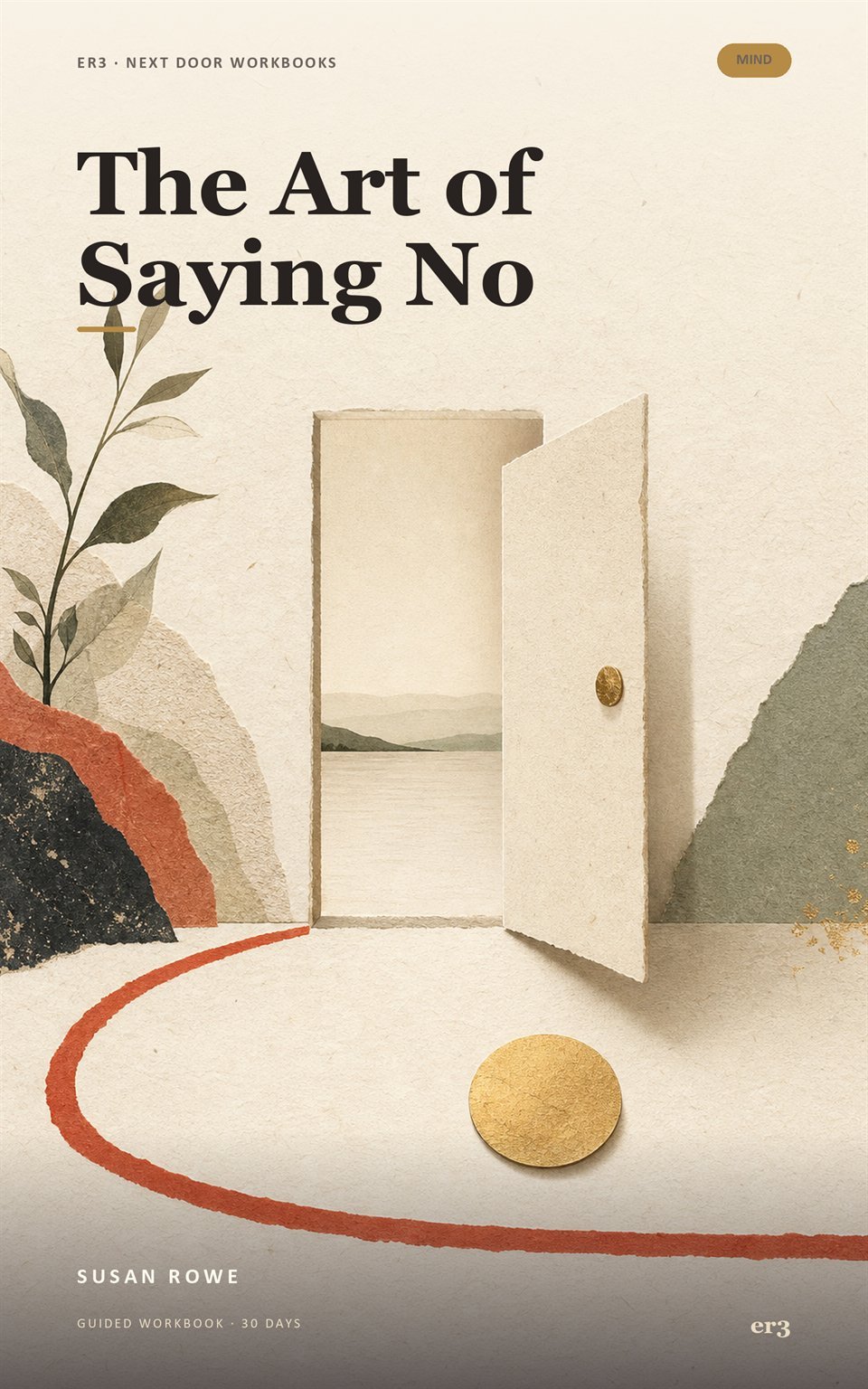
A 30-DAY CHALLENGE

The noise wears you out. You walk into a room and soak up everyone's mood like a sponge, then come home wrung dry — and you didn't even do anything. You've spent your whole life being told you're "too sensitive," "too intense," "too much"… and somewhere along the way, you started to believe it.

For the woman who feels everything at full volume and is done being told she's the problem.

The volume was always too high. Here's the day I finally found the dial.

There is a pair of foam earplugs in every bag I own. The good bright-orange ones that go soft and warm between your fingers before you roll them thin, then swell back slow and gentle inside your ear until the world drops half a step behind glass. Coat pockets. The zip pouch of my handbag. The glovebox. I could tell you the exact grit of the foam, the tiny squeak they make going in. For most of my life I thought carrying them everywhere was a small, embarrassing secret, like carrying a nightlight into your forties.

I noticed sound the way other people notice weather. The fridge hum that nobody else in the kitchen could hear. A jumper with a scratchy seam that could ruin an afternoon. The particular way a fluorescent tube in the office ticked, just under hearing, all day, a splinter in the ear. And people, mostly. I'd walk into a room and feel the temperature of it before anyone spoke, whose shoulders were up, who'd been crying in the car, which two had argued on the drive over. I soaked it all up through the skin and carried it home with me, damp and heavy, and I could not have told you why I was so tired when, on paper, nothing had happened.

So I did what you're told to do. I grew the skin, or tried to. Louder restaurants, brighter lights, more people, longer. Push through it and it stops reaching you, they promise, as if the nerves were a habit you could break. What actually happened was that the cost went underground, where I couldn't see it being spent. My sleep frayed first. Then my kindness, right at the edges, so that by evening the people I loved most got the thinnest, most brittle version of me, and I'd hear my own voice go sharp over nothing and hate the sound of it.

Push through it and it stops reaching you, they promise, as if the nerves were a habit you could break.

For a long time I believed the word for me was too. Too sensitive, too intense, too much, said so often and so lightly that I built a whole quiet life around taking up less space, apologizing before I'd even done anything, leaving early with a smile so nobody would ask.

The lowest I got wasn't loud at all. It was the floor of the laundry room, in the dark, at the far end of the house. A birthday party had spilled through my home all afternoon, my own child's, and by five I had gone looking for the one place the noise couldn't reach and found it there, among the baskets of dirty clothes, my back against the machine, cheek on a pile of towels that smelled of everyone. I remember the cool of the tiles coming up through me and the good clean dark and thinking, very calmly, that this was the only room in my house where nothing was asking me for anything. I sat on the floor by the washing at my own daughter's party. That was the bottom. Not a scene. Just a woman on the tiles, grateful for towels.

The thing that finally turned me wasn't gentle. It was an article, forwarded in a group chat, all clinical and kind, and it named what I was as a disorder. A condition. Something gone wrong in the wiring that a professional might help me manage. And I sat there and got angry, properly angry, in a way I hadn't let myself be in years. Because it was describing my whole life, the fridge hum and the scratchy seams and the rooms I could read like a page, and it was calling my skin a symptom. This wasn't a thing that had gone wrong in me. It was the surface I met the world through. It was how the world got in. You don't cure the skin. You learn where to stand.

Nothing lit up that day. But I started paying attention on purpose instead of just being flooded. I noticed which rooms drained me and which ones didn't, the texture of a good tired versus a raw one. I learned that I wasn't fragile for needing the radio off on the drive home. I was full. I needed the quiet the way other people need lunch, and I'd been going hungry for it for thirty years without knowing there was a word for the hunger.

You don't cure the skin. You learn where to stand.

The building back was slow, and I won't pretend it was a clean line up. I'd have a good stretch and then say yes to a weekend that left me flattened for three days, back on the tiles in spirit if not in body. But I worked in small, doable things, one at a time. A filter for the mornings. Something like a doorman for what I let in. Ten quiet minutes with a pen at the end of a day, writing down what had actually reached me instead of pretending the day had been weightless. Piece by piece I stopped bracing against my own wiring and started building rooms my nervous system could stand to live in.

I still overflow. The party still wins on a bad day; I still know exactly where the laundry room is. What changed is that I don't call it a fault anymore. I call it Tuesday, and I know what to do about it, and most of the time I do it before I hit the floor.

So here is the end of the party, years on. Everyone laughing, the music one notch too loud, a couple gone quiet by the window that my whole body wants to go tend. I feel the room start to fill me up the way it always has. And I reach into my coat pocket, and I find the orange foam gone soft from being carried, and I roll it thin and slip it in and feel the world drop that gentle half-step back behind glass. I don't explain it to anyone. I don't leave. I just turn the volume down to something I can live inside, and I stay.


Does this sound like you?

A crowded room drains you before anyone's said a word.
You feel other people's moods before they even speak.
You come home from an ordinary day completely wrung out.
You've apologized for feeling things your whole life.
$17When It All Feels Too Much
THE WORKBOOK

So I drew the map I found on that laundry-room floor

Thirty short days of learning where to stand in a loud world: how the noise gets in, how to filter it at the door, how to recover when a day floods you anyway. Not to cure a skin that was never a symptom, just to help you turn the volume down to something you can live inside, and stay.

  • 30 days, one at a time — no overwhelm.
  • One realistic step a day, with room to write.
  • Written by someone who lived it, not a cold manual.

Less than one loud dinner out that would have left you flattened for three days, for a map you keep for good.

✓ 30-day guarantee — full refund, no questions asked

Secure checkoutInstant downloadFill-in workbook30-day guarantee

What you get

Everything inside your 30-day workbook

30 days, one at a time

A short, honest read each morning and one small, doable step for that day. Ten quiet minutes, not a productivity sprint. Miss a day and pick it back up where you left off.

A filter map you build by hand

Daily journal prompts with real room to write, so you catch what actually reaches you instead of pretending the day was weightless. It ends in a personal filter map you keep and use.

A pact to sign on day one

A short, plain agreement with yourself that you'll do this at your pace and stop apologizing for how you're wired. Signed and dated, so it's yours.

A Day 27 for safety

Day 20 and Day 27 gently separate high sensitivity from panic attacks, agoraphobia, or a sadness that won't lift, and point you toward real help if the overwhelm has tipped past sensitivity.

The not-cured voice, in PDF

Written by someone who still overflows some Tuesdays. No breathe-deeply platitudes, no cure for a thing that was never broken. A clean PDF to print or keep on your phone.

What one day inside looks like

DAY 7 · AN ORDINARY DAY
  • A short, two-minute read that doesn't lecture you.
  • One single step for today. Small on purpose: it fits your worst day.
  • Room to write it in your own hand. Your words, your pace.

How the 30 days work

Week 1

How the world gets in through your skin

Week 2

Doormen for the noise: filtering it at the source

Week 3

Your cave: recovering after a day that floods you

Week 4

Living loud without apologizing or armoring up

Who wrote this

I

By Irene Vance

I'm Irene Vance, and I keep foam earplugs in the glovebox, the coat, and the bottom of every handbag I own. I spent years apologizing for being wired to feel everything at full volume, until I stopped treating my own skin like a symptom. These are the pages I taught myself to build.

Our deal with you

  1. We won't tell you that in 30 days you'll be cured. It doesn't work that way, and you know it.
  2. No invented testimonials, no fake countdowns, no "only 3 left".
  3. If you open the workbook and it doesn't speak to you, I'll refund you. No questions, for 30 days.
This is companionship, not therapy, and doesn't replace help from a professional. If you or someone is in danger, get help: in the US, 988 (crisis) and, in an emergency, 911. If there's abuse, the National Domestic Violence Hotline 1-800-799-7233. And if the pain has become constant, talk to a psychologist.

Frequently asked questions

Is this therapy?
No. It's one woman's honest experience and a gentle 30-day path, not treatment. It won't diagnose you or replace a professional. If the overwhelm has tipped into panic attacks, avoiding places you need to go, or a sadness that won't lift, Days 20 and 27 tell you plainly and point you toward real help.
Is something wrong with me, or is this just how I'm wired?
For most of us who feel everything at full volume, it's wiring — a real trait, not a defect. This workbook won't try to fix you, because there's nothing broken to fix. It helps you understand how the world reaches you and build everyday filters so it stops flattening you.
I've read the "just breathe" advice and it does nothing. How is this different?
Because it isn't that. No "breathe deeply," no positivity slogans. You get concrete, at-home filters — actual doormen for what comes in — plus a way to recover after a too-much day and a filter map you build and keep. Small, doable steps, one a day.
Do I have to do all thirty days perfectly?
No. One short read a day, ten quiet minutes, a small step, room to write by hand. Miss a day and pick it back up — this isn't one more thing to be "too much" or not enough at. It's yours, at your pace.

Start today. One day at a time.

You're not too much. The world is just loud — and no one taught you how to turn it down.

✓ 30-day guarantee — full refund, no questions asked

Get the free 1-page guide

Leave your email and I'll send it right now. «The 5-Minute Brain Dump»

I'll send you the guide and, now and then, something that might help. No spam; unsubscribe anytime.

This is companionship, not therapy, and does not replace help from a professional.

$1730-day guarantee — full refund, no questions asked
I want the workbook