A 30-DAY CHALLENGE

You park outside your mother's house and the knot is already there, tight in your stomach, before you've even turned off the engine. You walk out of every visit hollowed out β€” and somehow you're still the one who calls first, who caves, who says sorry. If you love them, you keep asking, why does being near them hurt this much?

For the one who leaves every family gathering wrecked, and is always the one expected to bend, to call, to forgive.

The engine was still running, and I still hadn't gone in.↓

The engine was still running. That is the part I remember most clearly. I had pulled up outside my mother's house, and instead of turning the key, I left it running, one hand on the wheel, watching her porch light do nothing in particular. I sat like that long enough that a neighbor waved. I waved back. And still I did not go in.

I did that most Sundays for the better part of a decade. It did not start there, of course. It started small and slow, the way these things do, back when I was a girl learning which mood the house was in before I'd even set down my bag.

By the time I was grown I had it down to a science. I would turn onto her street and my body would read the situation before my mind caught up. If her car was parked at that particular angle, the one that meant she'd been out and come back irritated, the knot arrived on its own, high and tight under my ribs, a full corner before I reached the house. I could feel my own shoulders climb. I would be bracing for a room I had not walked into yet.

And still I went in. Smiling, usually. I brought the good wine and the soft answers. I let the little digs go by over the potatoes because making something of them cost more than swallowing them did. Two hours later I would drive home hollowed out, replaying one sentence she'd said all the way back, arguing my case to a windshield.

My body read the street before my mind caught up β€” knot first, house second.

I called it love. That was the word I used with myself. This is what family costs; a good daughter absorbs it and shows up anyway; you don't get to choose your people. All of that felt like loyalty. It also happened to be the exact set of rules that kept me the one who bent.

Because I was always the one who bent. The one who phoned first after a bad visit, before the silence could set. The one who smoothed the air until the house softened. And then one afternoon, on the phone, cleaning up after some argument I had not even started, I heard myself do it.

I was apologizing. Fully, warmly, the way you mean it. And I stopped, mid-sentence, because I could not for the life of me find the thing I was sorry for. There wasn't one. I had done nothing. I was saying sorry the way you'd hum a song you didn't know you'd memorized β€” because the tune had been playing in that house since before I could talk.

Nobody said anything wise to me. There was no kind stranger, no line I wrote on my hand. There was just me, holding a phone, hearing my own voice ask forgiveness for a crime that did not exist, and understanding, all at once and about thirty years late, how much of my life I had spent doing exactly that.

So I changed one thing. Small, unheroic. The next bad visit, I did not call to smooth it over. I let the silence sit there and I sat with it, and it felt like doing something wrong, and I let it feel that way and did it anyway. The time after, when she baited me, I gave a short answer and moved on instead of defending myself for twenty minutes to someone who'd stopped listening years ago.

It did not go in a straight line. I hung up on a guilt trip one week and drove straight back into the middle of it the next, still hungry for a crumb of approval that was never coming. I'd find the distance and lose it and have to find it again. One thing at a time, written down at night so I'd believe I had actually done it, the way you write things down so they count.

Here is what caught me off guard. Standing back a little did not make me colder. It made room. From a step further off I could look at them as people doing the only thing they knew how to do, and I could stop bleeding every time I got near. The distance was not me abandoning anyone. It was the one thing that let the love keep breathing at all.

So let me ask you the thing I could not ask myself for years, sitting out there with the engine running. If loving them means you have to disappear a little every time β€” is it them you're protecting, or the idea that a good daughter never leaves the driveway?
Does this sound like you?

You brace before every visit, then leave it drained and shaky.
You're always the one who calls first and says sorry.
You love them and they still leave a mark every time.
"Family is family" β€” so you keep going back and paying for it.
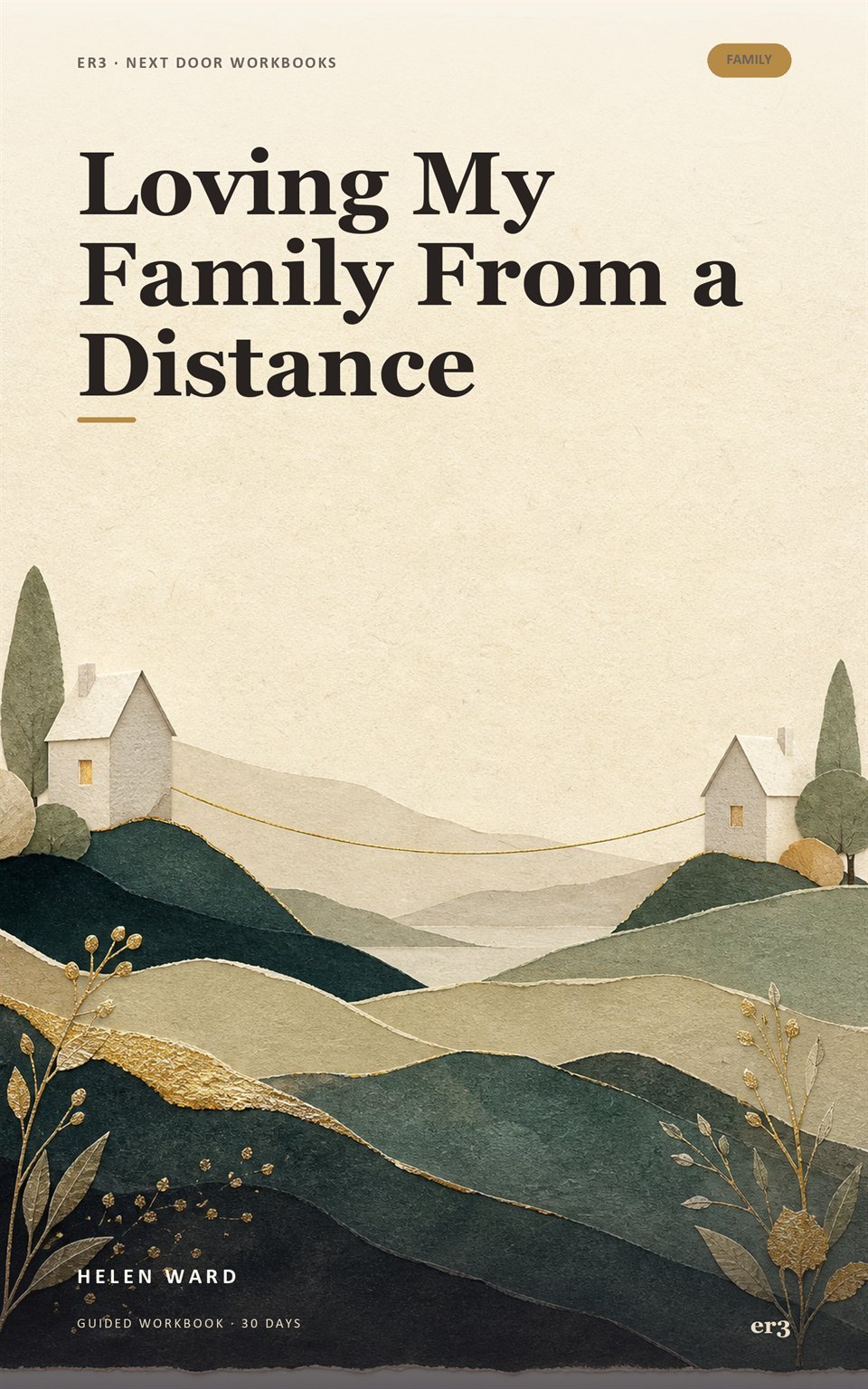
$17Loving My Family From a Distance
THE WORKBOOK

So I built the 30 days that got me out of that driveway

Not a cure and not a clean ending β€” a companion for the woman who reads the street before she reaches the house. One honest reading a night, one small thing to try, and a blank space to write it down so it counts: how to find the distance that lets the love keep breathing, and hold it without disappearing.

  • 30 days, one at a time β€” no overwhelm.
  • One realistic step a day, with room to write.
  • Written by someone who lived it, not a cold manual.

Seventeen dollars β€” less than the tank of petrol you've burned driving to visits that left you hollow.

βœ“ 30-day guarantee β€” full refund, no questions asked

Secure checkoutInstant downloadFill-in workbook30-day guarantee

What you get

Everything inside your 30-day workbook

30 days, one at a time

A short, honest reading each night, a small step to try the next day, and a blank line to write it down by hand so you believe you actually did it. Ten quiet minutes, nothing more.

Four weeks that go somewhere

See what the visits cost you, put in distance with real tools, carry the guilt without going under, then rebuild the bond on your own terms β€” a week each, in that order.

Words for the hard moments

The short answer that doesn't take the bait. Hanging up without an apology. Surviving the guilt trip and the payback that comes after you don't cave.

Your good-distance pact

A page you fill in and keep, and sign β€” what you'll refuse, how close is safe, and permission to forgive them without moving back into range.

Day 27, said plainly

The day that tells a hard family apart from real mistreatment, and points you toward proper help if it's gone past what distance can fix. A PDF you keep and return to.

What one day inside looks like

DAY 7 Β· AN ORDINARY DAY
  • A short, two-minute read that doesn't lecture you.
  • One single step for today. Small on purpose: it fits your worst day.
  • Room to write it in your own hand. Your words, your pace.

How the 30 days work

Week 1

Name what the visits actually cost you

Week 2

Put in real distance: short answers, hanging up, no smoothing-over

Week 3

Carry the guilt they trained into you without drowning in it

Week 4

Love them from a step back β€” refuse the crumbs, forgive without returning to the fire

Who wrote this

H

By Helen Ward

I'm Helen. I grow more tomatoes than two people could ever eat, mostly because the greenhouse is the one place nobody phones to ask why I haven't called. Took me forty years to learn that loving my family from a little further back wasn't the same as leaving.

Our deal with you

  1. We won't tell you that in 30 days you'll be cured. It doesn't work that way, and you know it.
  2. No invented testimonials, no fake countdowns, no "only 3 left".
  3. If you open the workbook and it doesn't speak to you, I'll refund you. No questions, for 30 days.
This is companionship, not therapy, and doesn't replace help from a professional. If you or someone is in danger, get help: in the US, 988 (crisis) and, in an emergency, 911. If there's abuse, the National Domestic Violence Hotline 1-800-799-7233. And if the pain has become constant, talk to a psychologist.

Frequently asked questions

Is this therapy?
No. It's one woman's honest experience, written as a 30-day companion β€” not treatment and not a replacement for a psychologist. If a relationship has crossed into real abuse, Day 27 says so plainly and points you toward proper help.
Does this mean I have to cut my family off?
No. This isn't about going no-contact or slamming a door. It's about finding the distance that lets the love survive β€” short answers, hanging up without apologizing, deciding for yourself how close is safe. You choose the setting, one day at a time.
I already feel guilty for even wanting space. Won't this make it worse?
The opposite. A whole week is about the guilt they taught you to carry β€” where it came from, and how to hold a boundary without drowning in it. You're allowed to protect your peace and still love them.
How does the 30 days actually work?
One short, honest reading a day, a small "step for today," and room to write by hand. Four weeks: see the hurt clearly, put in real distance with real tools, carry the guilt, and build a new relationship on your terms.

Start today. One day at a time.

Distance isn't the end of love. Sometimes it's the only thing that saves it.

βœ“ 30-day guarantee β€” full refund, no questions asked

Get the free 1-page guide

Leave your email and I'll send it right now. Β«5 Phrases to Set a Boundary Without Burning the BridgeΒ»

I'll send you the guide and, now and then, something that might help. No spam; unsubscribe anytime.

This is companionship, not therapy, and does not replace help from a professional.

$1730-day guarantee β€” full refund, no questions asked
I want the workbook